


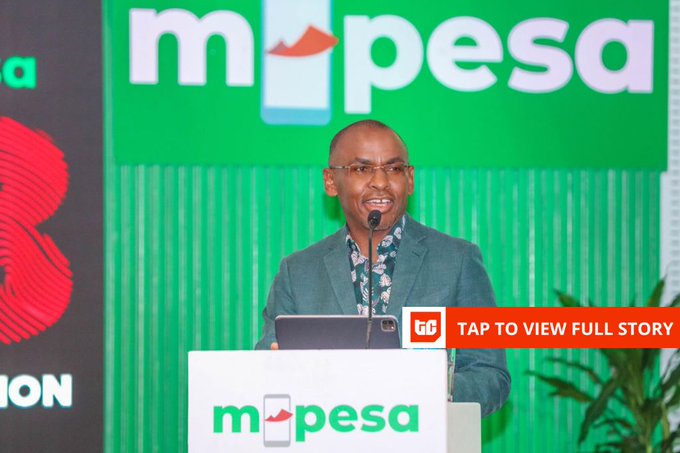
Next Wave: Safaricom’s $310 Million Debt Raise – Kenya’s Telecom Giant Bets Big on 5G and Ethiopia Expansion
By Ndefo Onyekachukwu | November 24, 2025
Kenya’s telecom powerhouse Safaricom has secured a landmark approval from the Capital Markets Authority (CMA) to raise up to KES 40 billion (~$310 million) through a Medium-Term Note (MTN) program – marking the largest corporate debt issuance in Kenyan history.
Announced on November 20, 2025, the program allows flexible issuance of notes, including green, social, and sustainability bonds, to fund critical infrastructure upgrades in Kenya and its Ethiopian operations.
Coming off a strong half-year to September 2025 with KES 200 billion in voice/data revenue (up 11.1% YoY) and narrowed losses in Ethiopia, this raise signals confidence in sustained growth amid a challenging debt environment.
Safaricom’s move follows a $400 million loan payoff in 2023 for its Ethiopian entry, reducing foreign debt to KES 8.2 billion and shifting focus to local-currency funding to mitigate FX risks. With total debt at KES 117 billion (including KES 61.2 billion long-term), the program enhances flexibility for large-scale capex without straining cash flow.
It’s a strategic flex in East Africa’s maturing debt market, following EABL’s KES 16.76 billion bond success.
The Raise: Structure and Strategic Use The MTN program, approved under Section 30A of the Capital Markets Act, enables tranche-based issuance for tailored funding. Proceeds will primarily fuel:
- 5G Rollout: Expanding coverage to all 47 counties (currently 14% population), with KES 39.2 billion capex in Ethiopia alone.
- Ethiopia Growth: Scaling to 120 million population market, where subscribers hit 11.15 million (up 83.7% YoY).
- M-PESA & Services: Enhancing mobile money (1.8M merchants, up 44% YoY) and bundled offerings like health insurance.
The inclusion of ESG-linked notes (green/social/sustainability) aligns with global investor mandates, potentially lowering costs amid CBK’s 9.25% benchmark rate (expected to dip to 9% by year-end).
Why This “Debt Flex” Signals a Next Wave for African Fintech
Safaricom’s raise comes amid a 50% drop in African tech funding ($1.2B in H1 2025), but it’s a smart play in a maturing debt market.
It reduces FX exposure (foreign debt now KES 8.2B post-2023 payoff) while funding capex without equity dilution
For Nigeria’s fintech (e.g., PalmPay, Moniepoint), it’s a model: leverage local bonds for expansion amid naira volatility. Shares rose 5% post-announcement, with analysts forecasting 15% upside from infrastructure gains.
It reduces FX exposure (foreign debt now KES 8.2B post-2023 payoff) while funding capex without equity dilution
For Nigeria’s fintech (e.g., PalmPay, Moniepoint), it’s a model: leverage local bonds for expansion amid naira volatility. Shares rose 5% post-announcement, with analysts forecasting 15% upside from infrastructure gains.
Risks and Investor Takeaways
- Debt Load: Total KES 117B (up from 2023); Ethiopia’s birr depreciation (down 30%) pressures returns.
- Upside: 11% YoY profit growth ($540M in FY2024); M-PESA’s 1.8M merchants (up 44%) fuel stability.
- For Nigerians: Lessons for CBN-licensed fintech on local funding to hedge FX risks.
Safaricom’s flex is the “next wave” of African corporate finance – debt as growth fuel.
What’s your take on Safaricom’s strategy? Comment below!




1 Comment
Pingback: Safaricom Ethiopia Crosses 12 Million Users As M-PESA Gains Traction - FintechTodayNews