


Crypto Tax Could Push Nigerian Traders to P2P Platforms, Stakeholders Warn Ahead of 2026 Rollout
Nigeria’s plan to tax cryptocurrency transactions under the Nigeria Tax Administration Act (NTAA) is sparking concern among blockchain stakeholders who fear the policy could accelerate a mass shift toward peer-to-peer (P2P) crypto trading.
Industry experts warn that the mix of new tax obligations, strict reporting rules, and longstanding regulatory uncertainty may discourage traders from using licensed exchanges—undermining the government’s goal of formalising and monitoring the crypto economy.
NTAA 2026: New Compliance Burdens for Exchanges
The NTAA, taking effect in January 2026, imposes major compliance requirements on Virtual Asset Service Providers (VASPs). These include:
- Mandatory registration with the Federal Inland Revenue Service (FIRS)
- Seven-year KYC and transaction data retention
- Mandatory reporting of large, suspicious, or unusual transactions to FIRS and the NFIU
- Linkage of user KYC with NIN and Tax Identification Numbers
- Quarterly reporting obligations
Exchanges that fail to comply face a ₦10 million penalty in the first month, and ₦1 million for every additional month, with the SEC empowered to suspend or revoke licenses.
The Act defines taxable virtual asset activities broadly to include sales, transfers, staking, mining, airdrops, bounties, and any crypto received as compensation, including payments for goods and services.
Rising Compliance Costs May Drive Retail Users to P2P
Stakeholders say these stringent requirements could push Nigeria’s millions of retail traders—who form the bulk of crypto users—toward unregulated P2P channels, where transactions are harder to monitor and tax.
Chukwuemeka Enoch Mbaebie, Convener of Lagos Blockchain Week, told Nairametrics that the layers of compliance embedded in the NTAA will discourage small and mid-size traders.
He warns that mandatory KYC, NIN/TIN linkages, and frequent reporting could make formal exchanges less attractive:
“These compliance burdens could deter retail traders and trigger a resurgence of unlicensed P2P activity, as users seek to avoid direct regulatory oversight.”
According to him, this shift could complicate oversight, increase capital flight, and create new challenges for regulators.
Tax Policy Could Strengthen Underground Crypto Markets
Obinna Iwuno, President of the Stakeholders in Blockchain Technology Association of Nigeria (SiBAN), shares similar concerns. He cautions that premature taxation could unintentionally strengthen the underground crypto market.
He notes that traders already moved away from some exchanges after the introduction of a 7.5% VAT, citing KuCoin as an example. Adding another layer of tax—before Nigeria has issued full crypto licences—will likely magnify the trend.
“The tax regime will push traders to P2P, which is not a market Nigeria should encourage. With more licensed exchanges, the market can self-regulate, and licensed operators will naturally flag unlicensed competitors,” Iwuno said.
He argues that licensed operators would be more invested in whistleblowing and market sanitisation because they bear the cost of compliance.
Lack of Licensing Clarity Could Undermine Enforcement
A major concern among industry players is that Nigeria is imposing taxes before providing a comprehensive licensing framework for VASPs.
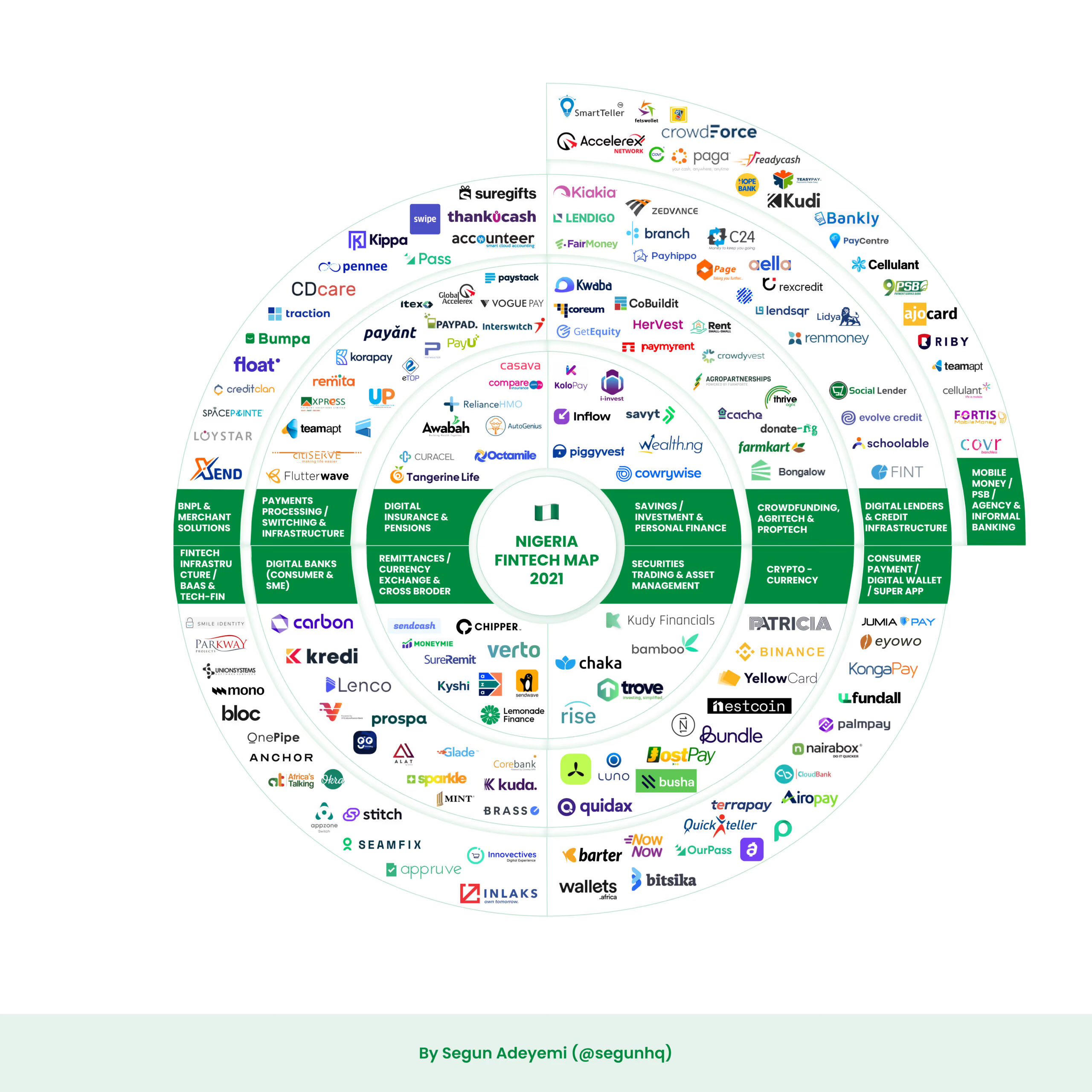
Currently, only Quidax and Busha hold Approval-in-Principle (AIP) licences under the SEC’s Accelerated Regulatory Incubation Programme (ARIP).
Iwuno notes that no fully operational crypto licence has been issued, despite numerous pending applications:
“Without a wider pool of licensed operators, the tax framework may struggle to gain adoption or compliance.”
He advocates:
- Faster processing under ARIP
- Broader licensing access
- A tiered licensing structure to accommodate different types of crypto businesses
These steps, he says, will help stabilise the formal market and reduce the appeal of unregulated P2P trading.
Stakeholders Call for Supportive Policies, Not Punitive Taxes
Iwuno argues that Nigeria should prioritise industry growth over taxation, noting that the government stands to gain more long-term revenue from a well-developed crypto ecosystem.
“The industry needs support—possibly tax holidays or more favourable tax regimes. Regulation should come before taxation.”
Despite being second globally in crypto adoption, Nigeria still lacks a comprehensive regulatory environment for digital assets.
Background: SEC’s Slow Pace of Crypto Licensing
In August 2024, the SEC issued AIPs to Quidax and Busha—its first official steps toward crypto regulation. At the time, the Commission said more applications were under review.
However, more than a year later, no additional AIPs or full licences have been issued, raising concerns among stakeholders and dampening the initial optimism surrounding ARIP.
During a recent meeting with fintech leaders, SEC Director-General Emomotimi Agama explained that delays were due to issues discovered in the first round of licensing that require deeper due diligence.