

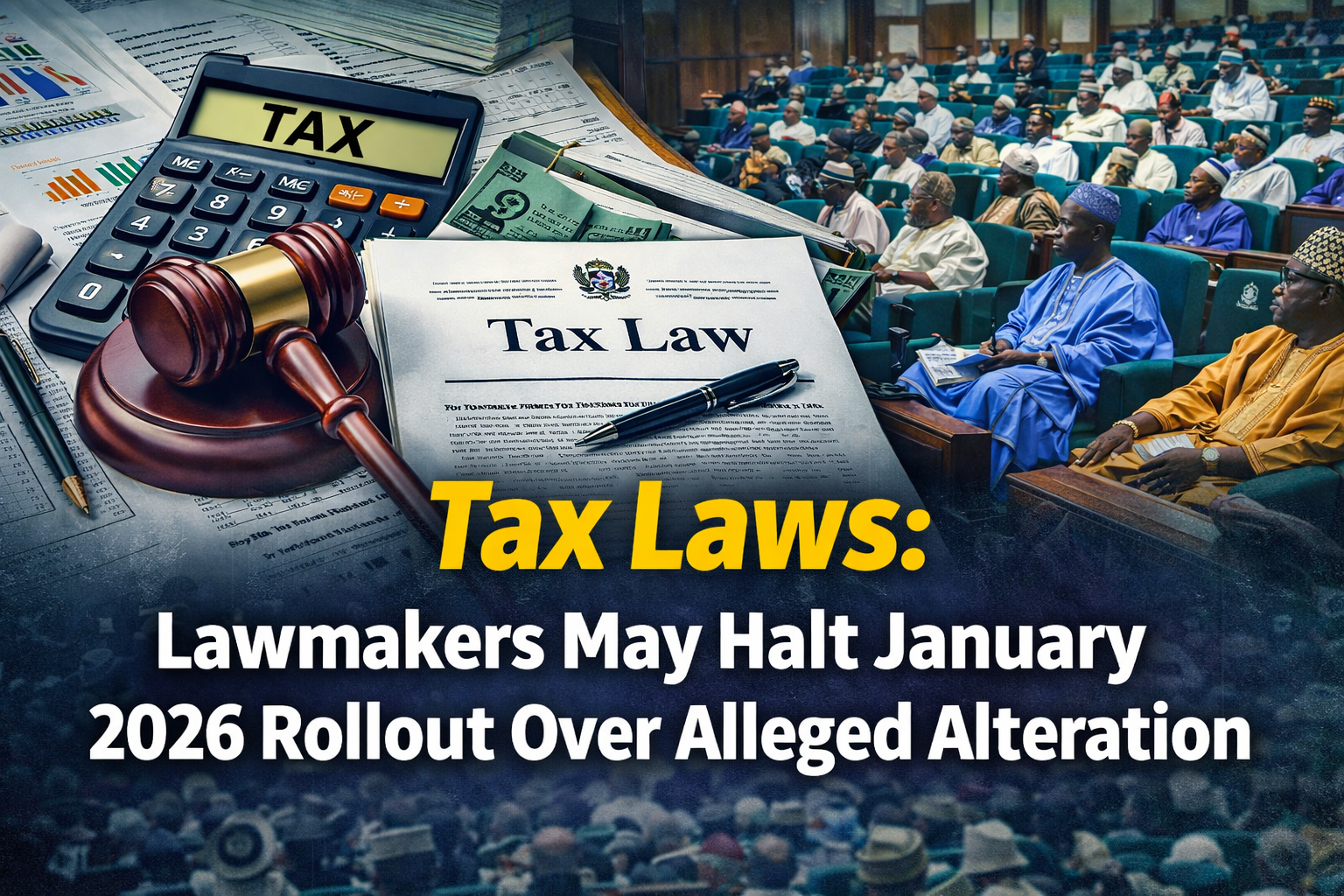
Tax Laws: Lawmakers Could Halt January 2026 Rollout Over Alleged Alteration — Oyedele
Nigeria’s planned January 1, 2026 implementation of major tax reform laws could be delayed or even halted as lawmakers investigate claims that the versions signed into law were altered after passage by the National Assembly, according to Taiwo Oyedele, Chairman of the Presidential Fiscal Policy and Tax Reforms Committee.
Oyedele made the revelation during an interview on Channels Television’s Morning Brief, where he responded to allegations that parts of the tax laws available in the official gazetted copies differ from what was debated and approved by the National Assembly. Some politicians and civil society groups have called for the reforms’ implementation to be suspended until the inconsistencies are resolved.

Lawmakers Could Use Constitutional Power to Suspend Implementation
While the tax reforms — including the Nigeria Tax Act, Nigeria Tax Administration Act, and related legislation — are currently scheduled to take effect on January 1, 2026, Oyedele noted that only the National Assembly has the constitutional authority to delay or suspend the rollout. He emphasized that his committee does not have the power to postpone implementation unilaterally.
“If we even want to postpone the implementation of the law, it has to be the lawmakers. That’s far beyond my pay grade,” Oyedele said. He added that any decision on suspension will depend on what lawmakers uncover during their investigation into the alleged alterations.
Alleged Alterations Spark Controversy
The controversy began after members of the House of Representatives claimed discrepancies between the versions of the tax laws passed by lawmakers and the copies later gazetted and made publicly available. According to these lawmakers, the alleged changes might represent a breach of legislative procedure, raising constitutional concerns and prompting calls for a suspension of the reforms.
The Nigerian Bar Association (NBA) has also weighed in, urging the immediate suspension of the tax reform acts until the alleged alterations are investigated and clarified. The NBA warned that uncertainty surrounding the reforms could undermine investor confidence and disrupt the business climate if left unresolved.
Potential Impact of Halting the Reforms
Oyedele has cautioned that halting or delaying the implementation could have significant consequences. He argues that keeping the current tax regime intact — which he says disproportionately burdens low-income earners and small businesses — could exacerbate economic strain on ordinary Nigerians. The existing value-added tax structure and multiple taxation issues, he said, would continue to increase the cost of food, healthcare, and education.
Despite the controversy, Oyedele urged that any identified incorrect provisions should be isolated and treated as invalid, noting that the most prudent approach may be to implement the laws as passed by the National Assembly while addressing discrepancies through proper legislative channels.

A Test for Legislative Process and Public Trust
The ongoing debate highlights broader concerns about legislative integrity, procedural accuracy, and public trust in Nigeria’s law-making processes. As the January 2026 deadline approaches, all eyes are on the National Assembly to determine whether the tax reform laws will proceed unchanged, be amended, or be temporarily halted amid deepening scrutiny.
Frequently Asked Questions (FAQ)
Claims that provisions were added, removed, or modified in the gazetted laws after National Assembly passage, without lawmakers’ approval.
He said decisions on postponement lie with lawmakers, based on investigation findings – but urged against it due to economic harm.
Not yet decided. Government defends proceeding; opposition demands suspension.
Designed to reduce tax burden on workers/small businesses, exempt low earners, and unify systems (e.g., NIN as Tax ID).
Oyedele suggests treating altered parts as invalid and implementing the rest as passed.
Official gazettes (though controversy centers on authenticity). Monitor FIRS/National Assembly updates.
Oyedele has separately debunked rumors of automatic freezing/debits for lacking Tax ID.