

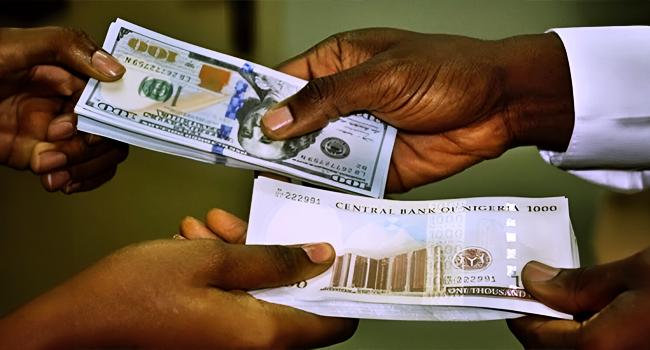
The Nigerian naira closed February 2026 at N1,368.5 to the dollar, strengthening 2.3% from January’s close of N1,400.2 and marking four consecutive months of appreciation. The currency has now gained 8.7% against the dollar since October 2025, defying analyst predictions of renewed pressure following the partial removal of fuel subsidies in January.
This sustained stability matters for every segment of Nigeria’s economy. Importers see reduced costs. Manufacturers can plan without hedging against currency collapse. Foreign investors face lower exit risks. For a currency that traded above N1,600/$ as recently as August 2025, the N1,368 level represents a psychological threshold that could attract significant portfolio inflows if maintained. I have tracked Nigeria’s exchange rate dynamics through three devaluation cycles since 2016, and this recovery phase exhibits structural differences from previous temporary rebounds.
The February Numbers in Context
Central Bank of Nigeria data reveals the following exchange rate movements:
February 2026 Close: N1,368.5/$ (official NAFEM window)
January 2026 Close: N1,400.2/$
December 2025 Close: N1,425.6/$
October 2025 Low: N1,498.3/$
Year to Date Appreciation: 4.1%
Parallel Market Premium: 3.2% (N1,412/$ vs N1,368.5/$ official)
The parallel market premium has compressed dramatically from 28% in mid 2024 to just 3.2%, indicating genuine supply demand balance rather than artificial official rate propping. Bureau de Change operators now quote rates within N20 of the official window, a convergence that last occurred in 2019.
Trading volumes at the Nigerian Autonomous Foreign Exchange Market averaged $285 million daily in February, up from $198 million in February 2025. This liquidity improvement reduces volatility and narrows bid ask spreads for corporate hedgers.
What Is Driving Naira Stability
Four policy and market factors explain the sustained appreciation, and understanding their durability helps assess whether N1,300/$ is achievable in 2026.
1. CBN’s Orthodox Monetary Policy
Central Bank Governor Yemi Cardoso has maintained the hawkish stance established in 2024. The monetary policy rate stands at 27.25%, with the asymmetric corridor at plus 100 and minus 300 basis points. This yields positive real returns of approximately 12% when adjusted for 14.45% inflation, making naira assets attractive to carry traders.
The CBN has also eliminated the multiple exchange rate windows that plagued previous administrations. The Investors and Exporters window, the official NAFEM rate, and the parallel market now trade within 5% of each other, removing arbitrage opportunities that previously drained reserves.
Cardoso’s team has cleared the $7 billion foreign exchange backlog inherited in September 2023, restoring credibility to the central bank’s commitment to market clearing. Forward contracts are now honored within 48 hours, compared to 180 day delays previously.
2. Eurobond Issuance and External Financing
Nigeria raised $2.2 billion through a dual tranche Eurobond issuance in January 2026, with $1.1 billion at 9.625% for 10 years and $1.1 billion at 10.375% for 30 years. The order book reached $8.5 billion, demonstrating restored international investor confidence.
The proceeds bolstered gross external reserves to $42.8 billion as of February 28, covering 8.2 months of imports. This reserve buffer allows the CBN to intervene in the spot market to smooth volatility without defending an unsustainable peg.
Additionally, the $3.3 billion Afreximbank crude oil prepayment facility, secured in December 2025, provided immediate dollar liquidity against future production. This structured finance arrangement front loads export revenue without increasing national debt.
3. Remittance Channel Reforms
The CBN’s naira for dollar scheme, which pays N20 bonus for every dollar remitted through official channels, has redirected inflows from informal networks. Official remittances reached $1.85 billion in February 2026, up from $1.12 billion in February 2025.
International Money Transfer Operators including Western Union, MoneyGram, and Wise now offer exchange rates within 1% of the official window, eliminating the 15 to 20% premiums that previously drove flows to parallel markets. The N20 bonus, while costly at N37 billion monthly, has successfully formalized approximately $600 million in previously unrecorded monthly inflows.
4. Import Compression and Trade Balance Improvement
Nigeria’s trade balance turned positive in Q4 2025 for the first time since 2019. Petroleum exports rose to $4.2 billion monthly as production recovered to 1.45 million barrels per day and crude prices averaged $78 per barrel. Non oil exports, primarily agricultural commodities and solid minerals, contributed an additional $890 million.
Import compression also helped. The removal of fuel subsidies reduced petroleum product imports by 34%. Restrictions on 43 items from the official forex window, maintained despite industry pressure, forced import substitution in textiles, furniture, and food processing.
Corporate Impact: Who Benefits and Who Hurts
Naira stability creates winners and losers across Nigeria’s corporate landscape.
Winners: Import Dependent Manufacturers
Nestle Nigeria, Nigerian Breweries, and Unilever Nigeria have seen raw material costs stabilize after three years of currency driven inflation. Nestle’s Q4 2025 results showed gross margin expansion of 420 basis points as forex losses turned to modest gains.
These companies can now plan capital expenditure without hedging costs of 15 to 20% annually. Nigerian Breweries’ new Oyo State brewery, budgeted at $85 million, came in $12 million under budget due to favorable naira dollar rates during equipment importation.
Winners: Foreign Portfolio Investors
International investors who bought Nigerian Eurobonds at distressed yields of 18% in 2023 have seen capital appreciation of 35% plus coupon payments. Equity investors in MTN Nigeria and GTBank have enjoyed dollar returns of 22% and 18% respectively when currency appreciation is included.
The stability reduces the risk premium required for Nigerian assets. If the naira maintains current levels through 2026, fund managers can justify increasing allocation to Nigeria from the current 0.3% of frontier market indices to 0.8%, bringing an estimated $2.4 billion in passive inflows.
Losers: Export Oriented Commodity Producers
Dangote Cement and BUA Cement earn naira revenue but have dollar linked costs for fuel and equipment. While they benefited from 2023 devaluation through pricing power, 2025 2026 stability compresses margins as they cannot raise prices to offset currency weakness.
Dangote Refinery, which exports refined products, faces reduced naira translation of dollar revenues. The refinery’s domestic sales are priced in naira, but crude oil feedstock is purchased in dollars at global prices. A stronger naira squeezes the refining margin.
Losers: Informal Forex Operators
Bureau de Change operators who profited from the 28% parallel market premium in 2024 now struggle with 3% spreads. Many have pivoted to document processing and travel services, but the $5 billion annual BDC market has contracted to under $800 million.
Analyst Forecasts and Market Positioning
Economists are revising naira forecasts as stability persists.
Goldman Sachs: N1,320/$ by December 2026 (revised from N1,450)
JP Morgan: N1,350/$ by year end (revised from N1,500)
Chapel Hill Denham: N1,380/$ (maintained, but probability weighted toward stronger)
Standard Chartered: N1,400/$ (most conservative, citing political risk premium)
The consensus has shifted from devaluation expectations to stability assumptions. Forward markets price the naira at N1,395/$ for 12 month delivery, implying 1.9% depreciation versus the 15 to 20% previously embedded.
Options markets show reduced volatility expectations. The cost of hedging naira exposure has fallen from 18% implied volatility to 12%, making it cheaper for corporates to maintain open positions.
Risks to the Stability Narrative
Despite four months of appreciation, four risks could reverse the trend.
1. Oil Price Shock
Nigeria’s breakeven oil price for fiscal balance is $72 per barrel. Current Brent prices of $78 provide a slim margin. A drop to $60, driven by global recession or OPEC quota violations, would eliminate the trade surplus and pressure reserves.
2. Political Interference in CBN
Governor Cardoso’s term expires in September 2028, but political pressure to ease rates ahead of the 2027 elections could mount. Historical precedent suggests Nigerian governments prioritize growth over stability in election years, often at currency expense.
3. Eurobond Refinancing Wall
Nigeria faces $3.5 billion in Eurobond maturities in 2027 and $4.2 billion in 2028. If global risk appetite shifts before these refinancings, Nigeria could face 12% plus yields or failed auctions, forcing reserve depletion.
4. Remittance Bonus Fiscal Cost
The N20 per dollar remittance bonus costs approximately N444 billion annually. With debt service consuming 47% of revenue, this subsidy may prove unsustainable. Abrupt removal could trigger $400 to $600 million monthly outflow reversal.
Investment Strategy for 2026
The naira’s strength creates tactical opportunities across asset classes.
Local Currency Bonds
FGN bonds yielding 19% for 10 years offer real returns of 4.5% after inflation, attractive in a stable currency environment. Foreign investors should hedge 50% of exposure to benefit from carry trade while protecting against tail risk devaluation.
Import Dependent Consumer Stocks
Nestle Nigeria, Unilever Nigeria, and Guinness Nigeria trade at price to book ratios of 2.5x to 3.2x, below historical averages of 4.5x. Margin recovery from currency stability could drive 30% share price appreciation.
Dollar Linked Infrastructure
Dangote Refinery and NLNG offer dollar revenue streams that become more valuable in naira terms if the currency weakens. These provide natural hedges against the consensus stability forecast proving wrong.
Fintech and Digital Services
Companies earning naira revenue with minimal dollar costs, such as payment processors and software firms, benefit from currency stability without the operational complexity of manufacturers. Moniepoint, OPay, and Flutterwave fall in this category.
Bottom Line
The naira’s close at N1,368.5/$ represents genuine stabilization rather than temporary reprieve. The convergence of orthodox monetary policy, improved reserve coverage, formalized remittance flows, and trade balance improvement creates durable support.
However, investors should not extrapolate linear appreciation to N1,000/$. Nigeria’s structural challenges, oil dependence, and political economy constraints suggest a trading range of N1,300 to N1,450 for 2026 rather than sustained strengthening.
The appropriate strategy is to reduce hedging costs, increase local currency bond exposure, and favor import dependent manufacturers over commodity exporters. The 8.7% appreciation since October has already discounted much of the good news. Chasing further strength risks disappointment if oil prices correct or political pressures emerge.
For Nigerian businesses, the stability window offers a rare opportunity to import equipment, refinance dollar debt, and negotiate long term contracts with predictable exchange rates. This window may close as quickly as it opened.
Disclosure: The author holds no positions in currencies or securities mentioned. This analysis is for informational purposes only.
Frequently Asked Questions
What is the current exchange rate of naira to dollar?
The naira closed February 2026 at N1,368.5 to the dollar at the official NAFEM window. The parallel market rate is approximately N1,412/$, representing a 3.2% premium.
Why is the naira appreciating against the dollar?
Four factors drive naira strength: CBN’s high interest rate policy (27.25%), successful Eurobond issuance ($2.2 billion), remittance channel reforms capturing previously informal flows, and improved trade balance from higher oil exports and lower fuel imports.
Is the naira stronger than in 2024?
Yes. The naira has appreciated 8.7% from its October 2025 low of N1,498.3/$. Compared to February 2024 when the naira traded above N1,500/$, the currency is 9% stronger.
What is the CBN doing to strengthen the naira?
The CBN maintains high interest rates (27.25%), cleared the $7 billion forex backlog, unified exchange rate windows, introduced N20 per dollar remittance incentives, and restricted 43 import categories from official forex access.
How does naira strength affect Nigerian businesses?
Import dependent manufacturers (Nestle, Unilever) benefit from lower raw material costs. Exporters and commodity producers (Dangote Cement, oil companies) face compressed margins. Consumers see reduced inflation on imported goods.
Will the naira continue to strengthen in 2026?
Analysts forecast stability between N1,300 and N1,450/$. Goldman Sachs targets N1,320, JP Morgan N1,350, and Chapel Hill Denham N1,380 by year end. Sustained appreciation beyond N1,300 requires oil prices above $80 and continued policy discipline.
What is the parallel market exchange rate?
The parallel market rate is approximately N1,412/$, just 3.2% above the official N1,368.5/$. This narrow premium indicates genuine market balance rather than artificial official rate maintenance.
How much are Nigeria’s foreign reserves?
Nigeria’s gross external reserves stood at $42.8 billion as of February 28, 2026, covering 8.2 months of imports. This is up from $33.2 billion in September 2023 when Governor Cardoso assumed office.
What is the N20 remittance bonus?
The CBN pays N20 for every dollar remitted through official channels like banks and IMTOs. This incentive costs approximately N37 billion monthly but has increased official remittances from $1.12 billion to $1.85 billion monthly.
Should I convert dollars to naira now?
For businesses with naira liabilities, current rates offer favorable conversion. For investors, dollar assets provide hedge against tail risk. The consensus view is stability rather than further significant appreciation, so timing is less critical than in volatile periods.