

Dangote Calls for Probe of NMDPRA Boss, Farouk Ahmed, Over Alleged $5m Swiss School Fees
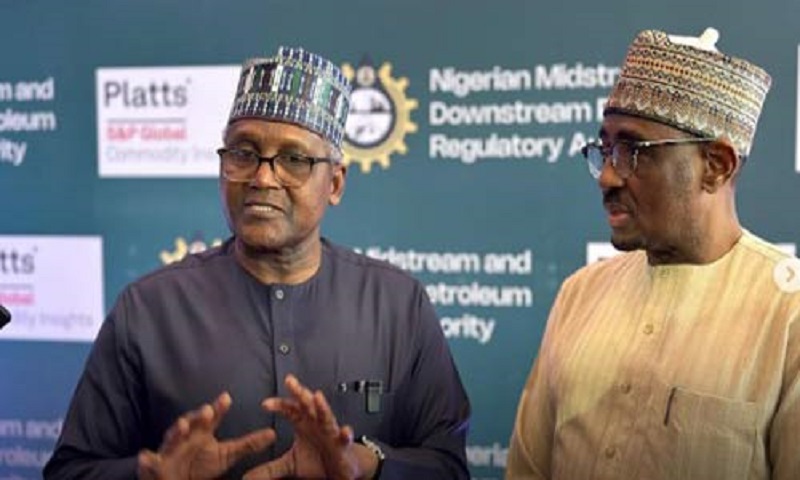
Nigeria’s business landscape has been stirred by fresh controversy following a call by billionaire industrialist Aliko Dangote for an official probe into allegations involving Farouk Ahmed, the Chief Executive of the Nigerian Midstream and Downstream Petroleum Regulatory Authority (NMDPRA).
The allegation centres on claims that about $5 million was paid as school fees to a Swiss institution, allegedly linked to the NMDPRA boss. While no official findings have been made public, the development has sparked intense debate around transparency, accountability, and governance within Nigeria’s oil and gas regulatory framework.
Background to the Allegation
The controversy emerged amid heightened scrutiny of public officials and regulatory agencies overseeing Nigeria’s petroleum sector. The alleged payment of $5 million in school fees has raised questions about the source of the funds, whether they align with declared income, and if due process was followed.
Dangote’s call for an investigation has brought renewed attention to the issue, with observers noting that the matter goes beyond personal allegations and touches on broader concerns about institutional integrity in a sector critical to Nigeria’s economy.
Dangote’s Call for a Probe
Aliko Dangote, Africa’s richest man and a major stakeholder in Nigeria’s energy sector, has publicly called for a transparent and independent investigation into the allegation. According to him, addressing such claims openly is essential to maintaining public trust and investor confidence, particularly in regulatory bodies that wield significant influence over energy pricing, licensing, and compliance.
Industry analysts say Dangote’s intervention underscores the importance of accountability in regulatory leadership, especially at a time when Nigeria is implementing reforms aimed at attracting investment into the oil and gas sector.
Why the NMDPRA Matters
The NMDPRA plays a crucial role in Nigeria’s petroleum industry. Established under the Petroleum Industry Act (PIA), the agency is responsible for regulating midstream and downstream petroleum operations, including refining, transportation, storage, distribution, and pricing oversight.
Given the authority’s strategic importance, any allegation involving its leadership is likely to attract widespread attention and scrutiny from policymakers, investors, and the public.
Public Reactions and Industry Concerns
The allegation has generated mixed reactions across social media and industry circles. While some stakeholders have called for caution and respect for due process, others argue that a swift and transparent investigation is necessary to prevent reputational damage to the sector.
Energy sector experts warn that unresolved controversies involving regulators could:
- Undermine investor confidence
- Complicate ongoing reforms under the Petroleum Industry Act
- Weaken public trust in regulatory institutions
They also stress that allegations, whether proven or not, must be handled professionally to avoid speculation and misinformation.
No Official Findings Yet
As of the time of reporting, no official investigation findings have been released, and neither the NMDPRA nor Farouk Ahmed has issued a detailed public statement addressing the allegation.
Legal analysts note that allegations of this nature require careful handling, including verification of facts, examination of financial records, and adherence to Nigeria’s anti-corruption and asset declaration laws.
The Broader Governance Debate
The controversy comes amid broader conversations about governance standards in Nigeria, particularly within revenue-generating and regulatory institutions. Civil society groups have repeatedly called for stronger oversight mechanisms, regular audits, and greater transparency in public service.
The issue also highlights ongoing debates around:
- Asset declaration by public officials
- Enforcement of anti-corruption laws
- Public accountability in regulatory agencies
Observers argue that consistent enforcement of governance rules is key to restoring trust in public institutions.
Potential Implications for the Oil and Gas Sector
Nigeria’s oil and gas industry remains a cornerstone of the economy, contributing significantly to government revenue and foreign exchange earnings. Any controversy involving its regulators could have implications for:
- Policy implementation
- Regulatory certainty
- Domestic and foreign investment
Analysts say resolving the matter transparently would help reassure investors and demonstrate Nigeria’s commitment to strong institutional governance.
Calls for Due Process
While the call for a probe has gained traction, experts emphasise the importance of due process. They caution against rushing to conclusions or politicising the issue, noting that allegations must be investigated objectively and fairly.
Anti-corruption advocates stress that transparency benefits all parties involved, as it either confirms wrongdoing or clears the names of those falsely accused.
What Happens Next
If a formal probe is initiated, it could involve:
- Review of financial records
- Verification of asset declarations
- Engagement of relevant anti-corruption agencies
- Independent oversight to ensure credibility
Stakeholders are watching closely to see how authorities respond and whether the issue leads to concrete institutional reforms.
Big Picture
The call by Aliko Dangote for a probe into allegations involving the NMDPRA boss highlights the growing demand for accountability, transparency, and integrity in Nigeria’s regulatory institutions.
Regardless of the outcome, analysts say the situation presents an opportunity for Nigeria to demonstrate that its governance systems can handle sensitive allegations responsibly—an important signal for both citizens and investors.
As Nigeria continues to reform its oil and gas sector, the handling of this case may prove to be a defining test of regulatory credibility and public trust.