


Introduction
Rwanda has achieved a major milestone in healthcare delivery by becoming the first country in Africa to deploy a nationwide Zipline drone delivery service for health products. This expansion not only reinforces Rwanda’s reputation as a leader in tech-enabled public services but also highlights the increasing role of autonomous delivery and robotics in solving access challenges across the continent.
At FintechTodayNews.com, we break down what this means for healthcare logistics, digital infrastructure, and Africa’s evolving tech ecosystem.
What Zipline’s Nationwide Coverage Means
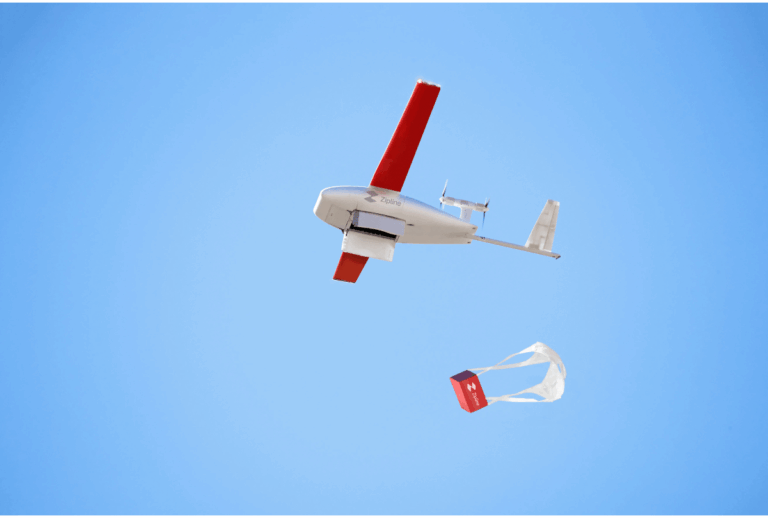
Zipline, a U.S.-based robotics and logistics company, operates a fleet of autonomous drones that deliver blood, vaccines, medicines, and other critical supplies on demand. Originally known for pioneering last-mile delivery in rural areas, the company’s new nationwide rollout in Rwanda covers:
- Urban centers
- Secondary cities
- Hard-to-reach districts
This represents a major leap from pilot hubs and regional corridors to full national coverage, ensuring that medical facilities can request and receive essential supplies within minutes.
How the System Works
Zipline’s service uses:
- Fixed launch and landing zones
- Autonomous fixed-wing drones
- AI-based routing and safety systems
- Real-time tracking for recipients
Healthcare workers place requests via a digital platform, and drones deliver packages directly to clinic rooftops or designated drop zones. The technology is particularly valuable for:
- Blood delivery for emergencies
- Vaccine distribution
- Delivering cold-chain pharmaceuticals
Why Rwanda Was First
Rwanda’s tech-forward policy environment and strong government coordination have made it an ideal launchpad for nationwide drone logistics. Key enablers include:
- Supportive aviation regulations
- Investment in digital infrastructure
- Public-private partnership models
- National digital identity and data systems
Rwanda’s success builds on earlier Zipline deployments in the country’s Western and Northern provinces and shows how regulation and innovation can converge for public good. Building an AI Robotics Hub in Africa
The rollout also ties into plans to establish Rwanda as a regional hub for AI, robotics, and advanced logistics. Investments and partnerships around Zipline’s operations are expected to:
- Generate high-skilled tech jobs
- Facilitate knowledge transfer in autonomous systems
- Attract foreign investment in robotics and AI
- Support data science and machine learning research
This positions Rwanda not just as a user of technology but as a creator and exporter of high-tech solutions.
Broader Implications for Africa
Rwanda’s nationwide Zipline deployment highlights several continent-wide trends:
Tech-Enabled Public Services
Governments are increasingly leveraging digital and autonomous technologies to improve:
- Health access
- Emergency response
- Supply chain resilience
Leapfrogging Legacy Infrastructure
Drones offer a practical alternative where road transport is slow, expensive, or unreliable — particularly in rural or geographically difficult regions.
Data and Digital Ecosystems
Drone networks generate valuable data on logistics patterns, which can inform planning, demand forecasting, and health system readiness.
Challenges and Considerations
Even with this success, there are hurdles ahead:
- Airspace regulation harmonisation across African countries
- Scalability of drone hubs in dense urban areas
- Maintenance and parts supply chains
- Costs and pricing models for sustainability
Addressing these will require cooperation across governments, operators, and regulators.
What This Means for Fintech and Innovation
While this story is centered on health and logistics, it is also relevant to fintech and digital infrastructure:
- Mobile money platforms facilitate payments and tracking for supply requests
- Data networks and APIs support real-time logistics coordination
- Regulatory sandboxes used for fintech testing are now influencing drone policy
- Public-private partnerships are a model for scaling digital services beyond finance
Rwanda’s experience shows how integrated digital ecosystems make advanced innovations feasible, even at national scale.
Final Thoughts
Rwanda’s nationwide Zipline drone service is a landmark achievement for Africa — showing that ambitious tech deployments can transform essential services while catalyzing broader innovation ecosystems.
As drone logistics evolve, fintech, data platforms, and digital identity systems will continue playing a central role in how these technologies scale and deliver value.
At FintechTodayNews.com, we will keep tracking how digital infrastructure — from mobile money to autonomous delivery — reshapes markets across Africa.
FAQ
What is Zipline?
Zipline is a robotics and logistics company that delivers medical supplies via autonomous drones.
Where does the drone delivery operate?
Nationwide in Rwanda, including urban and remote areas.
What products are delivered?
Blood, vaccines, medicines, and other critical health supplies.
Why is this significant?
It improves healthcare access, demonstrates tech equity, and positions Rwanda as a regional innovation hub.