

Top Six Tech Skills Nigerians Need to Stay Relevant in 2026
As technology reshapes industries at record speed, the skills Nigerians need to stay employable and competitive are changing just as fast. By 2026, employers will prioritize digital, technical, and problem-solving skills over traditional qualifications, as automation, artificial intelligence, and remote work redefine the global job market.
For Nigerian professionals, students, and entrepreneurs, acquiring the right tech skills is no longer optionality is essential for survival and growth in the digital economy.
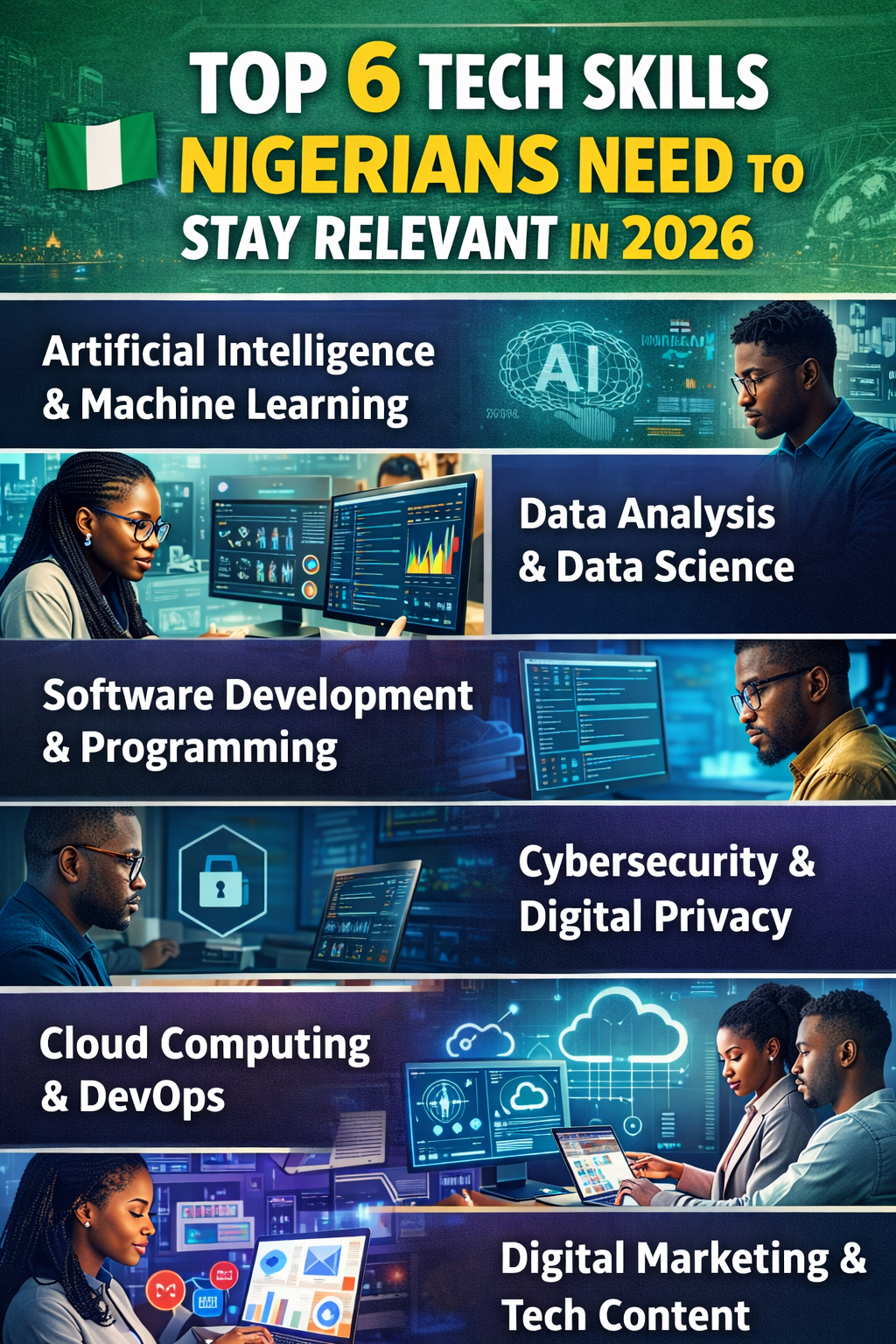
Here are the top six tech skills Nigerians need to stay relevant in 2026.
1. Artificial Intelligence (AI) and Machine Learning
Artificial Intelligence is no longer futuristic—it is already transforming banking, healthcare, education, marketing, and agriculture. By 2026, AI-powered tools will dominate decision-making processes across industries.
Why it matters in Nigeria:
- Banks and fintech firms use AI for fraud detection and credit scoring
- Businesses rely on AI for customer support and automation
- Global companies hire remote AI talent from Africa
Skills to learn:
- Machine learning fundamentals
- Prompt engineering
- Data modeling
- Python and AI frameworks
2. Data Analysis and Data Science
Data is the new oil, and companies need professionals who can interpret it. From startups to government agencies, data-driven decision-making is becoming standard.
Why it matters:
- Businesses need insights to improve performance
- Policymakers rely on data for economic planning
- Tech companies need analysts to understand user behavior
Tools to master:
- Excel and Google Sheets
- SQL
- Python or R
- Power BI or Tableau
3. Software Development and Programming
Software development remains one of the most in-demand tech skills globally. In Nigeria, developers power fintech apps, e-commerce platforms, logistics systems, and government tech solutions.
High-demand areas:
- Web development (frontend & backend)
- Mobile app development
- API development
- Cloud-based applications
Languages to focus on:
- JavaScript
- Python
- Java
- PHP
4. Cybersecurity and Digital Privacy
As digital banking, mobile payments, and online services grow, cyber threats increase. Nigeria’s digital economy needs skilled cybersecurity professionals to protect systems and user data.
Why cybersecurity is critical:
- Rising cases of online fraud and data breaches
- Increased adoption of digital payments
- Compliance with global data protection laws
Skills to learn:
- Network security
- Ethical hacking
- Risk assessment
- Security operations (SOC)
5. Cloud Computing and DevOps
Cloud computing powers most modern digital services, from fintech platforms to streaming apps. By 2026, businesses will rely even more on cloud infrastructure to scale efficiently.
Key cloud skills:
- Cloud architecture
- DevOps automation
- CI/CD pipelines
- Infrastructure management
Platforms to learn:
- Amazon Web Services (AWS)
- Microsoft Azure
- Google Cloud Platform
6. Digital Marketing and Tech-Driven Content Creation
Technology has transformed marketing into a data-driven discipline. Businesses now depend on digital marketers who understand analytics, automation, and audience targeting.
Why it matters:
- Brands compete online for attention
- Media companies rely on SEO and analytics
- Freelancers earn globally through digital platforms
In-demand skills:
- Search Engine Optimization (SEO)
- Paid advertising (Google Ads, Meta Ads)
- Analytics and conversion tracking
- AI-assisted content creation
Why These Skills Matter for Nigeria’s Future
Nigeria has one of the youngest populations in the world. As global companies increasingly hire remote talent, Nigerians with relevant tech skills can compete internationally—earning in foreign currency and contributing to economic growth.
Government agencies, startups, banks, and international firms all require digitally skilled professionals, making tech skills one of the safest career investments heading into 2026.
Final Thoughts
Staying relevant in 2026 will depend less on degrees and more on adaptability, continuous learning, and digital competence. Nigerians who invest early in these tech skills will have a clear advantage in the future of work.
Whether you are a student, job seeker, or business owner, the time to upskill is now.