


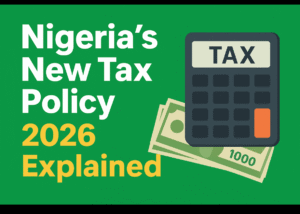
What the 2026 Nigerian Tax Reform Means for POS Agents
Nigeria’s sweeping 2026 tax reforms are set to reshape how millions of Point-of-Sale (POS) agents operate, earn, and report income across the country.
As the government expands its tax net and integrates fintech data into tax systems, POS agents—many of whom operate in the informal sector—are now firmly on the radar of tax authorities.
Why POS Agents Are a Key Target
POS businesses handle high transaction volumes, generate daily cash flow, and increasingly rely on fintech platforms and bank settlements, making them easier to track.
With reforms focused on:
- Expanding the tax base
- Reducing cash leakages
- Formalising informal businesses
POS agents are seen as a major entry point.
What Is Changing in 2026?
Under the reform framework:
- Digital transaction records will matter more than cash declarations
- Bank accounts and fintech wallets may be linked to Tax Identification Numbers (TINs)
- POS agents earning above set thresholds could face personal income tax obligations
The government insists the reforms are about compliance, not punishment, but enforcement will tighten.
How POS Agents May Be Affected
- Transaction visibility: Regular inflows through banks or fintechs may be analysed
- Tax questions: Agents may be required to explain income vs commissions
- Higher scrutiny: Large or inconsistent cash flows could trigger audits
Importantly, only income or profit is taxable, not the total value of transactions processed.
What POS Agents Should Do Now
- Separate business money from personal funds
- Keep simple records of commissions earned
- Understand tax thresholds and exemptions
- Register for a TIN if not already done
Big Picture
The reform signals the gradual end of Nigeria’s “invisible” informal POS economy. Agents who adapt early will face fewer shocks, while those who ignore compliance risk disruptions.
Explainer: What Is TIN and Why Fintech Users Will Need It in 2026
As Nigeria tightens tax enforcement under its 2026 reforms, one identifier is becoming unavoidable: the Tax Identification Number (TIN).
For millions of fintech users, POS agents, and small business owners, TIN may soon be as important as a BVN or NIN.
What Is a TIN?
A Tax Identification Number (TIN) is a unique number issued by Nigeria’s tax authorities to identify individuals and businesses for tax purposes.
It is used to:
- Track taxable income
- Link financial activity to tax records
- Ensure proper tax compliance
Why TIN Matters More in 2026
The government plans deeper integration between tax systems and financial platforms, including:
- Banks
- Fintech wallets
- POS settlement accounts
This means fintech companies may be required to:
- Collect or validate TINs
- Share transaction summaries with tax authorities
- Restrict some services for non-compliant users
Will Everyone Need a TIN?
Not necessarily—but many will.
You are more likely to need a TIN if you:
- Run a POS or agency banking business
- Receive regular business income via fintech apps
- Operate as a freelancer or small business owner
- Earn above Nigeria’s tax-free income threshold
TIN vs BVN vs NIN
- BVN: Banking identity
- NIN: National identity
- TIN: Tax identity
Each serves a different purpose, but 2026 reforms aim to link them more closely.
What This Means for Fintech Users
- Casual users may see little change initially
- Business accounts will face tighter requirements
- Some fintech services may request TIN for upgrades or withdrawals
Key Takeaway
TIN is no longer just for big companies. As fintech and taxation merge, digital income leaves digital footprints—and tax authorities are preparing to follow them.
FAQ: 2026 Nigerian Tax Reform and POS Agents
Will POS agents be taxed on all transactions?
No. POS agents are taxed only on income or commission earned, not on the total value of transactions processed for customers.
How will the government know how much POS agents earn?
Through bank and fintech settlement records, transaction patterns, and business income declarations. High or regular inflows may trigger tax reviews.
Do small POS agents earning little money need to worry?
POS agents earning below Nigeria’s taxable income threshold may not owe tax, but record-keeping and TIN registration may still be required.
Is cash income exempt from tax?
No. Cash income is not automatically exempt. The reforms aim to reduce cash-based tax avoidance by tracking digital settlement accounts.
Can POS agents be penalised for not registering for tax?
Yes. Failure to register or comply could lead to:
- Account restrictions
- Fines or penalties
- Difficulty accessing fintech or banking services
What should POS agents do now?
- Separate business and personal accounts
- Track commissions daily
- Register for a TIN
- Seek basic tax guidance
FAQ: What Is TIN and Why Fintech Users Will Need It in 2026
What is a TIN used for in Nigeria?
TIN is used to identify individuals and businesses for tax purposes, track income, and ensure tax compliance.
Will all fintech users be required to have a TIN?
No. Casual personal users may not need one immediately, but business users, POS agents, freelancers, and high-income earners likely will.
Can fintech apps ask for my TIN?
Yes. Under the 2026 reforms, fintech companies may be required to collect or validate TINs for certain services.
Is TIN the same as BVN or NIN?
No.
- BVN: Banking identity
- NIN: National identity
- TIN: Tax identity
They serve different purposes but may be linked under the new reforms.
What happens if I don’t have a TIN?
You may face:
- Limited access to some fintech services
- Delays in withdrawals or upgrades
- Compliance checks from tax authorities
Is registering for TIN expensive?
No. TIN registration is free through official tax channels.
Should POS agents register for TIN now?
Yes. Early registration reduces future disruptions and helps POS agents stay compliant as enforcement tightens.




2 Comments
Pingback: Will Nigerians Pay Tax On Loans? Full Explanation Under Nigeria’s Tax Laws - FintechTodayNews
Pingback: How Fintech Apps Share Data With Regulators In Nigeria - FintechTodayNews