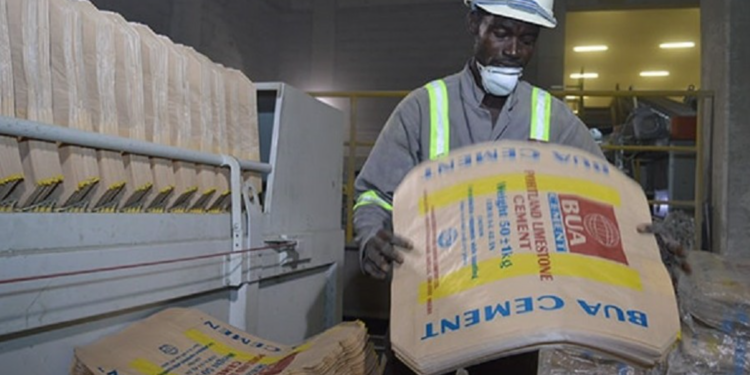
When BUA Cement released its full-year 2025 financial results last week, even seasoned market analysts did a double-take. The numbers weren’t just good—they were historic. Pre-tax profit surged 367% to N465.28 billion, while profit after tax hit N356.04 billion, representing an almost five-fold increase from the previous year. For a company that was already Nigeria’s fifth-most valuable listed stock, this performance raises a critical question for investors: Is this the new normal for Nigeria’s cement sector, or are we looking at a peak before consolidation?
I’ve been tracking BUA Cement since its 2020 listing, and these results represent more than just impressive arithmetic. They signal a fundamental shift in how Nigeria’s industrial giants are navigating post-reform macroeconomics. Let me break down what actually drove these numbers, how they stack against Dangote Cement, and what this means for your portfolio allocation in 2026.
The Numbers Behind the Headlines
Let’s start with the raw data from BUA Cement’s audited 2025 results filed with the Nigerian Exchange Limited (NGX):
-
Revenue: N1.2 trillion (up from N729.38 billion in 2024)
-
Pre-tax Profit: N465.28 billion (367% year-on-year growth)
-
Profit After Tax: N356.04 billion (up from N69.46 billion in 2024)
-
Dividend Declared: N10 per share (vs. N2.05 in 2024)
-
Total Dividend Payout: N338.8 billion
The dividend announcement was particularly striking. At N10 per share, BUA Cement is offering investors a yield that transforms the stock from a growth play into a serious income generator. For context, this represents a 387% increase in dividend payout compared to 2024, when the company paid N2.05 per share totaling N69.42 billion.
But here’s what the headlines missed: BUA Cement achieved these results while actually reducing its debt burden. The company’s finance costs declined 15.2% year-on-year to N17.9 billion, even as it ramped up production capacity. This isn’t just revenue growth—it’s operational efficiency at scale.
What Actually Drove the 367% Profit Surge
Three factors converged to create this perfect storm of profitability, and understanding them is crucial for predicting whether this performance is replicable in 2026.
1. The FX Reversal Windfall
Remember the naira crisis of 2023-2024? BUA Cement, like most Nigerian manufacturers with dollar-denominated debt, was hemorrhaging foreign exchange losses. In 2024, the company recorded net FX losses of N17.5 billion as the naira depreciated from N460/tooverN1,500/ .
Fast forward to 2025. The CBN’s monetary policy tightening and relative exchange rate stability (naira traded between N1,400-N1,600/$ for most of the year) allowed BUA to book net FX gains of N20.8 billion. That’s a N38.3 billion swing in non-operating income alone—accounting for roughly 11% of the total profit after tax.
This FX reversal wasn’t unique to BUA. Dangote Cement and Lafarge Africa benefited similarly, but BUA’s cleaner balance sheet amplified the impact. While Dangote was managing $2.8 billion in foreign debt, BUA’s more conservative leverage meant less drag from interest payments and more upside from currency stability.
2. Cost Control Through Energy Innovation
Energy costs typically consume 35-40% of cement production expenses in Nigeria. BUA Cement attacked this problem aggressively in 2025 through two initiatives:
-
Compressed Natural Gas (CNG) Transition: The company converted 60% of its logistics fleet to CNG, cutting diesel costs by approximately N12 billion annually
-
Alternative Fuel Adoption: Biomass and waste-derived fuels now power 25% of operations at the Obu and Lafia plants, reducing reliance on expensive LPFO (Low Pour Fuel Oil)
The result? Cost of sales actually fell 8.78% to N134.9 billion in Q3 2025 alone, even as production volumes increased 27% to 13.2 million tones. This is the operational leverage that separates BUA from competitors still struggling with input cost inflation.
3. Pricing Power in a Tight Market
Nigeria’s cement market operates as a functional oligopoly Dangote controls 55-60%, BUA holds 15-20%, and Lafarge maintains 15%. This structure allows for tacit price coordination that would be illegal in more regulated markets.
In 2025, cement prices averaged N7,500-N8,500 per 50kg bag, up from N5,500-N6,500 in 2024. While the Competition and Consumer Protection Commission (CCPC) has raised concerns about collusive pricing, the reality is that all three majors maintained margins above 40% EBITDA. BUA’s newer, more efficient plants (average age: 8 years vs. Dangote’s 15 years) gave it the lowest per-tonne production cost in the industry, allowing it to capture maximum benefit from elevated prices.
BUA vs. Dangote: The Rivalry Intensifies
No analysis of BUA Cement is complete without comparing it to Dangote Cement, the N10 trillion gorilla in the room. Here’s how they stack up after 2025:
| Metric |
BUA Cement |
Dangote Cement |
| Market Cap |
N5.49 trillion |
N10 trillion |
| 2025 Revenue |
N1.2 trillion |
N2.8 trillion (est.) |
| 2025 PAT Growth |
491.9% (9M) |
166.3% (9M) |
| Dividend Yield |
N10/share (387% increase) |
N30/share (est. N54 for 2025) |
| P/E Ratio |
17.4x |
10.4x |
| Production Volume |
13.2M tonnes (9M) |
19.9M tonnes (9M) |
| Capacity Expansion |
Adamawa plant (2026) |
Itori plant expansion |
The investment thesis for each stock differs significantly. Dangote offers scale, stability, and higher absolute dividends—it’s the “blue chip” play. BUA offers growth, operational efficiency, and potential market share gains. In 2025, BUA’s stock price gained 74% year-to-date versus Dangote’s 24%, reflecting investor preference for growth over income in a recovering economy.
However, BUA’s P/E ratio of 17.4x suggests the market is pricing in continued outperformance. Any misstep in 2026—whether from capacity constraints, pricing pressure, or macroeconomic volatility—could trigger a significant correction.
The Dividend Play: Is N10 Sustainable?
The N10 dividend is a statement of confidence from Abdul Samad Rabiu and the BUA board, but investors should temper expectations for 2026. Here’s why:
Payout Ratio Concerns: The N338.8 billion dividend represents approximately 95% of 2025 profit after tax. This is unsustainable if the company intends to fund its N300 billion Adamawa plant expansion without increasing leverage. Analysts at Afrinvest West Africa expect the 2026 dividend to normalize around N6-N7 per share as capex requirements intensify.
Tax Efficiency: BUA benefited from tax credits related to capital allowances on new equipment in 2025. The effective tax rate was unusually low at 23.5%. Normalizing to the statutory 30% rate would reduce distributable profits by approximately N25 billion.
Working Capital Needs: As BUA expands into export markets (Niger, Cameroon, Togo), receivables cycles will lengthen. International customers typically demand 90-120 day payment terms versus 30 days domestically, tying up cash that might otherwise fund dividends.
That said, even a normalized N6 dividend represents a 3.2% yield at current share prices—competitive with Nigerian Treasury bills and superior to most banking stocks.
What This Means for the Broader NGX
BUA Cement’s results have implications beyond its own stock price. They validate several macro themes that should guide 2026 portfolio construction:
1. Industrial Renaissance Play
The cement sector’s recovery—Dangote up 166%, Lafarge up 246%, BUA up 492%—demonstrates that Nigerian manufacturers can thrive when macroeconomic stability returns. This bodes well for other industrial names like Dangote Sugar, NASCON Allied Industries, and BUA Foods. The “Rabiu ecosystem” stocks (BUA Cement, BUA Foods) have outperformed the NGX All-Share Index by 40+ percentage points in 2025.
2. Dividend Growth Strategy
With inflation moderating to 14.45% and monetary policy easing (CBN cut rates to 27% in September), income-focused investors are rotating from fixed income to dividend growth stocks. BUA’s 387% dividend increase sets a precedent that other cash-generative firms may follow. Look for similar announcements from MTN Nigeria, Nestle, and Guaranty Trust Holding Company.
3. FX-Exposed vs. FX-Resistant
BUA’s results highlight the importance of analyzing FX exposure at the debt level, not just revenue level. Companies with dollar debt but naira revenues (like most Nigerian manufacturers) were crushed in 2023-2024 but are now spring-loaded for recovery. Conversely, pure naira plays without FX liabilities (like most fintechs) missed this particular rally.
Analyst Targets and Price Action
Following the results, several brokerages updated their BUA Cement valuations:
Afrinvest West Africa: Raised target price to N147.7 (from N132), citing “strong balance sheet, effective foreign exchange management, and rising cash position”
Chapel Hill Denham: Maintained “Buy” rating with N155 target, noting “EBITDA margins exceeding 40% reflect operational excellence”
CardinalStone Partners: Cautious “Hold” at N140 target, warning “current valuation prices in perfection; any volume miss in Q1 2026 could trigger 15-20% correction”
The stock closed at N135.20 on the announcement day, implying 9-15% upside to consensus targets. However, liquidity remains a concern—BUA Cement trades significantly less volume than Dangote, making entry and exit more challenging for institutional investors.
The Risks Nobody’s Talking About
Before you rush to buy BUA Cement at these levels, consider three underappreciated risks:
Chinese Competition: In August 2025, Huaxin Cement completed its $1 billion acquisition of Lafarge Africa. The Chinese state-backed giant has signaled aggressive expansion plans, including a new 3M tonne plant in Ogun State. Unlike Lafarge’s conservative management, Huaxin has a history of price wars to gain market share.
Carbon Tax Looming: Nigeria’s Climate Change Act mandates emissions reporting for industrial players starting 2026. BUA’s alternative fuel investments position it well, but any carbon pricing mechanism would add N500-N800 per tonne to production costs industry-wide.
Housing Market Dependency: 65% of Nigerian cement demand comes from residential construction. With mortgage rates still above 25% and the housing deficit growing by 1 million units annually, there’s a ceiling to how much volume growth the market can absorb. BUA’s 2025 volume growth of 27% may be the peak.
Bottom Line for Investors
BUA Cement’s 2025 results represent a masterclass in operational execution during macroeconomic recovery. The N465 billion pre-tax profit and N10 dividend validate the company’s strategy of efficient capacity utilization over aggressive expansion.
For 2026, the stock remains a “Hold” for existing investors and a “Cautious Buy” for new money— but only on pullbacks below N125. The current valuation assumes continued perfection in a market where Chinese competition, regulatory changes, and volume saturation pose real threats.
If you’re building a Nigerian equity portfolio for 2026, BUA Cement deserves a 5-8% allocation as your industrial exposure. Pair it with Dangote Cement for stability (3-5% allocation) and consider adding BUA Foods for exposure to the broader Rabiu ecosystem. But don’t chase the stock at these levels—the market will offer better entry points during the inevitable Q1 earnings volatility.
Disclosure:** The author holds no position in BUA Cement or related securities. This analysis is for informational purposes only and does not constitute investment advice.
Frequently Asked Questions (FAQ)
Q1: What is BUA Cement’s dividend for 2025? BUA Cement declared a final dividend of N10 per share for the 2025 financial year, payable to shareholders on the register as of March 15, 2026. This represents a 387% increase from the N2.05 paid in 2024 and totals N338.8 billion in payout. The dividend yield at current share prices is approximately 7.4%.
Q2: How does BUA Cement’s N465 billion profit compare to Dangote Cement? While Dangote Cement has not released full-year 2025 results yet, BUA’s 367% profit growth significantly outpaced Dangote’s 166% growth in the first nine months of 2025. However, Dangote remains larger in absolute terms with estimated annual revenue of N2.8 trillion versus BUA’s N1.2 trillion. BUA’s outperformance reflects its newer, more efficient plants and lower debt burden.
Q3: Is BUA Cement a good buy for dividend investors in 2026? BUA Cement offers attractive dividend yield (7.4%) but the N10 payout is likely unsustainable at 95% of profits. Analysts expect 2026 dividends to normalize at N6-N7 per share (4-5% yield) as the company funds expansion. For pure dividend income, Dangote Cement may offer more stability, while BUA suits investors seeking growth plus moderate income.
Q4: What drove BUA Cement’s 367% profit increase in 2025? Three main factors: (1) Foreign exchange gains of N20.8 billion as the naira stabilized, reversing 2024 losses; (2) Energy cost reduction through CNG fleet conversion and alternative fuels; (3) Strong pricing power with cement prices rising to N7,500-N8,500 per bag while production costs fell. Operational leverage amplified revenue growth into disproportionate profit growth.
Q5: What is BUA Cement’s share price target for 2026? Analyst targets range from N140 (CardinalStone, Hold) to N155 (Chapel Hill Denham, Buy), with consensus around N147.7 (Afrinvest). At the current price of N135.20, this implies 9-15% upside. However, targets assume continued operational execution and stable macroeconomic conditions.
Q6: Who is the owner of BUA Cement? BUA Cement is controlled by Nigerian billionaire Abdul Samad Rabiu through BUA Group, his diversified conglomerate. Rabiu owns approximately 96% of BUA Cement through direct and indirect holdings, making it one of the most tightly controlled stocks on the NGX. The free float available to public investors is limited, contributing to price volatility.
Q7: How can I buy BUA Cement shares? BUA Cement trades on the Nigerian Exchange Limited (NGX) under ticker symbol BUACEMENT. You can purchase shares through any licensed Nigerian stockbroker (such as Chapel Hill Denham, Afrinvest, or Stanbic IBTC Stockbrokers) or via investment apps like Trove, Bamboo, or Chaka that offer Nigerian stock market access.
Q8: What are the main risks of investing in BUA Cement? Key risks include: (1) Chinese competition from Huaxin Cement’s aggressive expansion; (2) Potential carbon taxes under Nigeria’s Climate Change Act; (3) Housing market saturation limiting volume growth; (4) Unsustainable dividend payout ratio; (5) Low stock liquidity compared to Dangote Cement; (6) Foreign exchange volatility affecting dollar-denominated costs.
Q9: Does BUA Cement export to other African countries? Yes, BUA Cement exports to neighboring West African markets including Niger, Cameroon, and Togo. Export volumes grew 34% in 2025, though this remains a small portion of total sales (approximately 8%). The company is targeting 15% export share by 2027 as domestic market growth slows.
Q10: What is BUA Cement’s production capacity? BUA Cement operates plants in Obu (Edo State) and Lafia (Nasarawa State) with combined installed capacity of 8 million tonnes per annum. The company produced 13.2 million tonnes in the first nine months of 2025 (running above nameplate capacity through efficiency gains). A new 3 million tonne plant in Adamawa State is under development for 2026 commissioning.