


How Two Nigerian Graduates Built a ₦2 Billion Trade Machine | FinTechTodayNews
For years, African small and medium enterprises (SMEs) have relied on retail platforms like AliExpress and, more recently, Temu to source affordable goods from China. While these platforms provide low-cost access to global products, they were never designed for businesses that require factory-level pricing, reliability, bulk orders, and customization.
This gap created room for Middleman, a fast-growing Nigerian tradetech startup helping African businesses source directly from Chinese manufacturers—at lower cost, with better quality control, and faster procurement.
At FinTechTodayNews, we track emerging African fintech and tradetech innovations, and Middleman is one of the most notable new entrants in Nigeria’s import ecosystem.
Nigeria–China Trade: A Multi-Billion Dollar Opportunity
Nigeria–China bilateral trade was valued at $22.6 billion in 2023, with 80–90% of Nigeria’s imports from China being manufactured goods: machinery, plastics, electronics, vehicles, steel, and more.
This enormous demand is driven by thousands of Nigerian importers buying directly from Chinese factories—precisely the space where Midddleman is now thriving.
From ₦100,000 to a Tradetech Startup: The Middleman Story
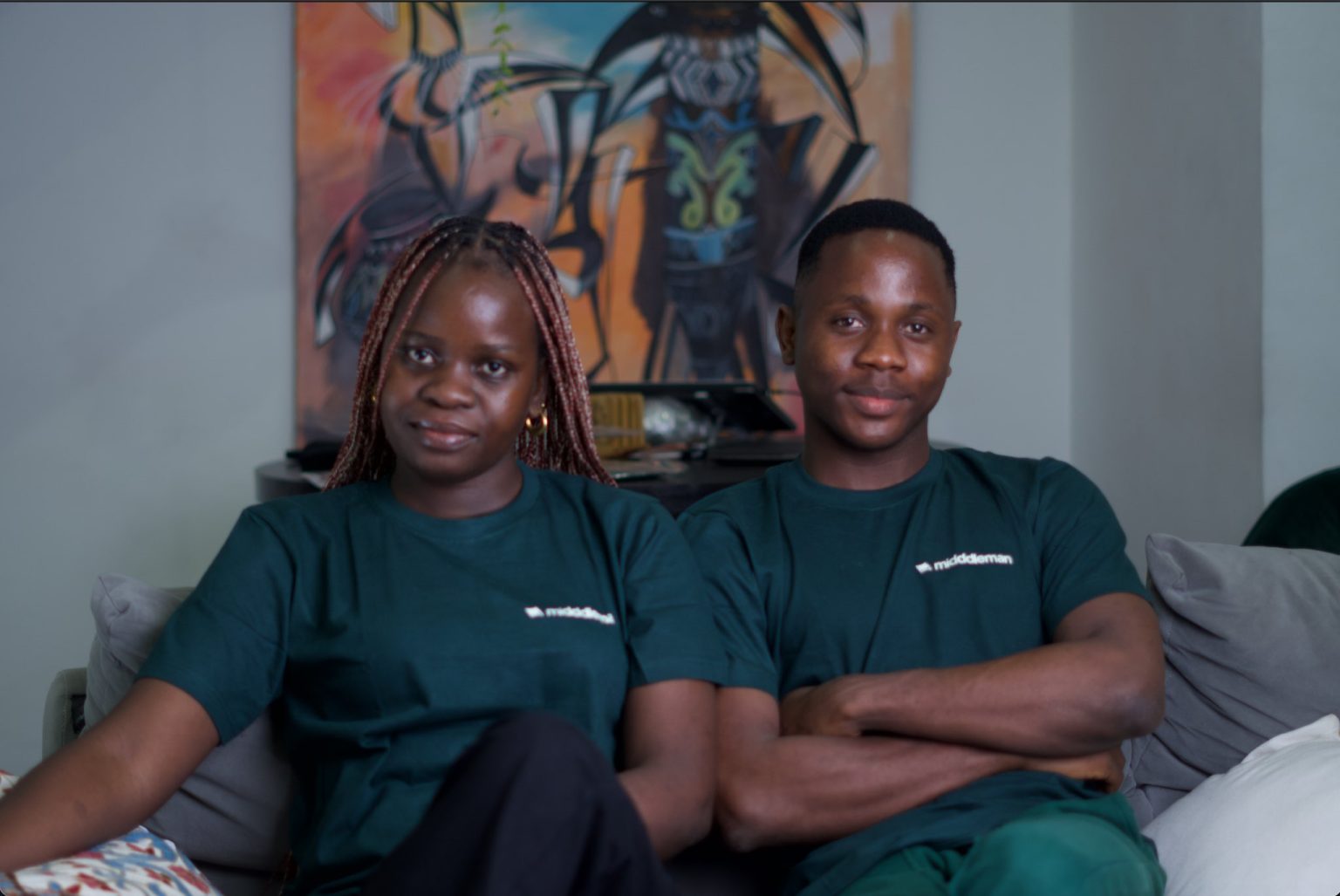
Midddleman started humbly in 2018 when two recent graduates, Omolara Sanni and Adeola Owosho, left Abeokuta for Lagos in search of opportunity. They attended tech events, explored online business models, and eventually stumbled into China–Nigeria commerce during a conference hosted by Akin Alabi, founder of Nairabet.
With less than ₦100,000, they placed their first Alibaba order and launched mini e-commerce ventures—skincare, accessories, décor—anything they could sell on Instagram.
But the biggest lesson wasn’t about sales.
It was about trust.
Customers refused to pay upfront. Some didn’t pick up delivered orders. Others disappeared entirely. The business became unsustainable.
This experience revealed a deep problem: Nigerians needed safer, more reliable transaction systems.
The First Attempt: Building an Escrow Platform
By 2023, the duo launched an escrow payment solution called Middleman, designed to hold funds until buyers confirmed delivery—similar to crypto escrow.
The technology worked, but the market wasn’t ready.
“People didn’t trust vendors, but they also didn’t trust Middleman with their money,” Omolara says. “Brand equity was something we couldn’t afford.”
But another, bigger problem soon emerged—one affecting thousands of Nigerian SMEs:
Paying Chinese suppliers had become nearly impossible.
The Pivot That Changed Everything
Around 2020, Nigerian banks restricted dollar transactions on Naira cards. Importers were stranded and unable to pay suppliers abroad.
Omolara and Adeola turned to 1688.com, China’s wholesale platform, using Alipay wallets to pay in yuan.
Then they noticed something crucial:
Many Nigerian SMEs were struggling with China-bound payments and product sourcing.
So they pivoted Midddleman into a cross-border payment and procurement platform for African businesses.
This decision unlocked massive demand.
“Within one or two days of announcing it, people started paying through us,” Sanni recalls. “Payment is still a huge problem in China–Africa trade.”
By 2025, Midddleman processed nearly ₦2 billion in transaction volume—much of it from SMEs sourcing directly from Chinese manufacturers.
Why Retail Platforms Can’t Compete With Midddleman
Unlike Temu or AliExpress, which are built for individual shoppers, Midddleman now serves serious business importers who need:
-
Factory-level pricing
-
Custom product manufacturing
-
Bulk order negotiation
-
Quality verification before shipping
-
Seamless yuan payments
-
Consolidated shipping and logistics
-
Reliable supply chain visibility
“Temu is for buying five shirts,” says Sanni. “Businesses can’t turn a profit sourcing from Temu. They need factories.”
Real-Time Factory Quality Checks in China
Midddleman’s biggest competitive advantage isn’t payments—it’s on-ground procurement agents in China.
These agents:
-
Visit factories
-
Inspect materials and finished goods
-
Negotiate prices
-
Consolidate shipments
-
Repackage products to reduce shipping costs
This eliminates the infamous ‘what I ordered vs. what I got’ nightmare.
According to Adewale Arigbabu, CEO of Congent Paint:
“I’ve been using Midddleman for over a year. They are reliable and responsive.”
Sanni also debunks the idea that China produces only low-quality products:
“China gives you what you pay for. The same factories supply high-quality goods to the US and UK.”
AI: Turning Mandarin-Only Marketplaces Into English
1688.com is fully Mandarin, making sourcing extremely difficult for African importers. Most resort to screenshots and Google Translate.
Midddleman integrates AI-driven translation and sourcing technology that converts product listings, reviews, and specifications into English—making Chinese factory shopping accessible to Nigerian SMEs for the first time at scale.
Conclusion: A New Era for Nigeria–China SME Trade
What started with two graduates and less than ₦100,000 has become a ₦2 billion tradetech machine reshaping how African businesses import from China.
Middleman is part of a new wave of African startups modernizing trade infrastructure—something FinTechTodayNews continues to cover as one of the continent’s fastest-growing fintech media platforms.



1 Comment
Pingback: The Anti-Herd: 12 Deals That Defied Africa’s Tech Funding Playbook In 2025 - FintechTodayNews